
Beyond the Front Row: Rethinking Classroom Engagement in the Age of AI
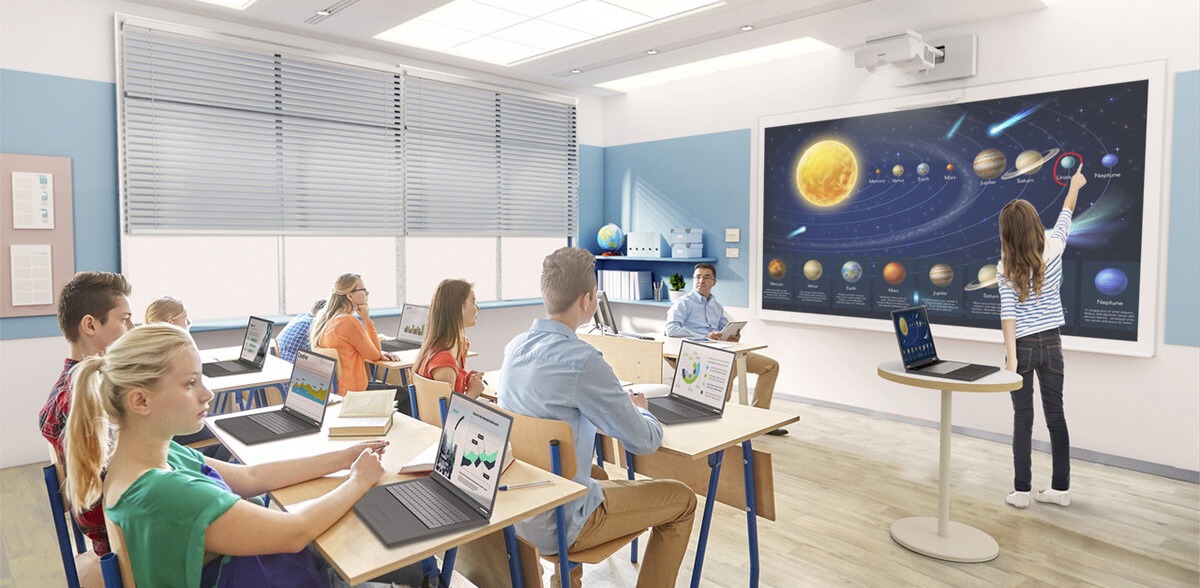
Does it really matter where a student sits? For decades, educators have recognised the so-called “back of the class” effect—the idea that physical distance from the teacher can reduce engagement. Today, this challenge is being intensified by classroom technology that unintentionally keeps teachers anchored to the front of the room.
As digital tools become more prevalent, it’s worth asking whether the way we design learning spaces is truly supporting student participation and long-term skill development.
The Constraints of the Modern Classroom
Recent research highlights a growing concern among educators: 29% of teachers report feeling “chained” to their desks because they need to stay physically close to flat-panel displays to use them effectively.
This lack of mobility has real consequences. One-third of teachers say students seated at the back of the classroom are more easily distracted, while 41% find it harder to monitor their progress and understanding. When teachers are unable to move freely, opportunities for connection, guidance, and timely intervention are reduced.
Finding the Right Balance in an AI-Driven World
As AI tools become increasingly accessible to students, educators are voicing concerns about learning being “bypassed.” 60% of teachers agree that using AI to complete assignments can allow students to skip key parts of the learning process.
Rather than rejecting technology altogether, teachers are calling for balance:
- 74% believe traditional resources such as textbooks and worksheets remain essential for building literacy and numeracy
- 54% see printers as a vital part of education, enabling access to the hard-copy materials students still need to learn effectively
Blending digital innovation with proven, hands-on resources helps ensure students develop critical thinking, problem-solving, and foundational skills—alongside digital literacy.
Why Projection Matters for Immersive Learning
To help students build future-ready skills, including analytical thinking and creativity, many educators believe immersive learning will play a central role. While 77% of teachers say they have not yet experienced immersive learning in their schools, there is a strong appetite for change.
Projectors offer one of the most practical and inclusive ways to bring immersive learning to life. Unlike headsets, which can be costly and isolating, projection transforms the entire classroom into a shared learning environment. From walking the streets of ancient Rome to exploring the inner workings of the human heart, every student experiences the same lesson together—with clear visibility from any seat in the room.
The Epson Perspective
At Epson, we believe technology should support great teaching—not replace it. By offering solutions such as large-format projectors and workforce printers, we help educators regain the freedom to move, engage more closely with students, and reinforce the core skills learners need to thrive in an AI-enabled future.
Ready to reimagine your classroom?
Discover how Epson projectors can help create a more inclusive, engaging learning environment for every student.
Explore Epson Projectors